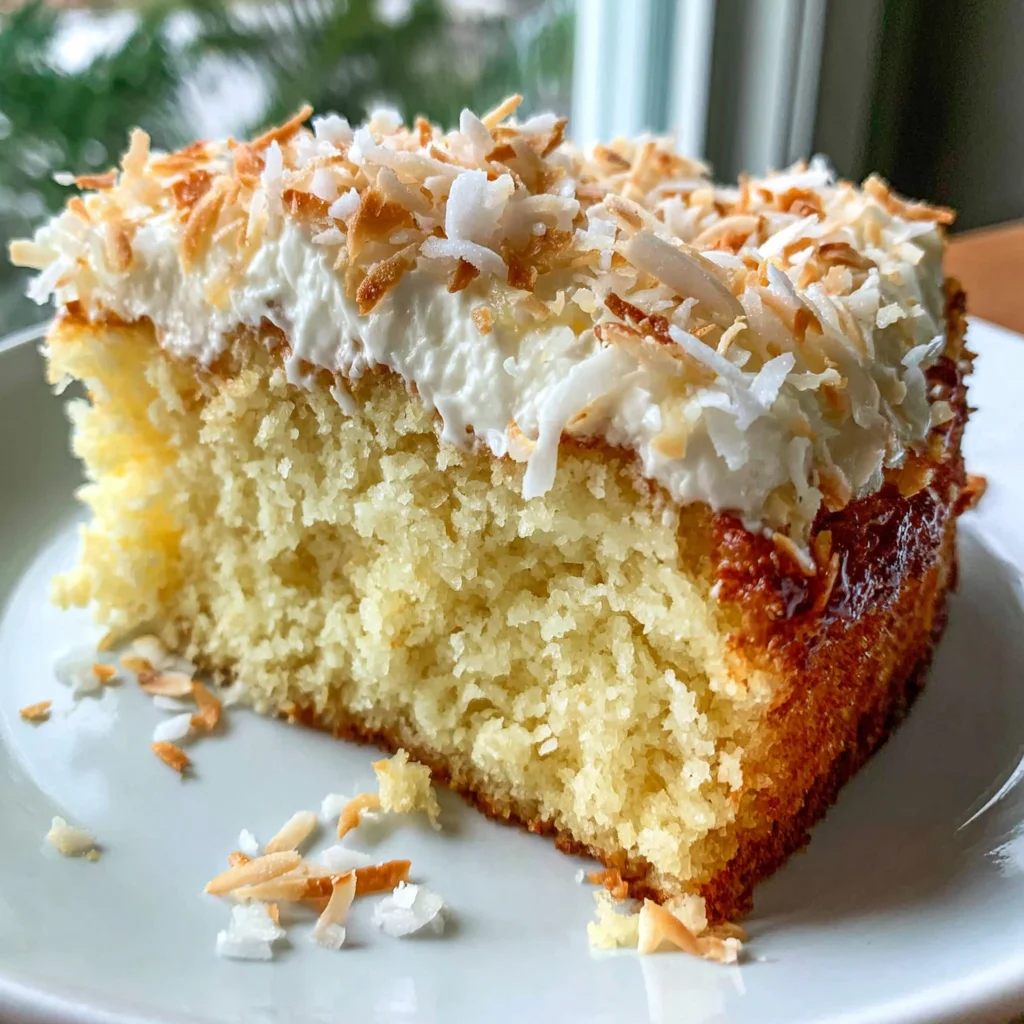
Welcome to the dessert recipe that will forever change the way you think about coconut. Forget dry, crumbly cakes; we are diving headfirst into the luxurious world of the Creme of Coconut Cake. This isn’t just a cake it’s an experience. Imagine a delicate, fluffy coconut sponge saturated with a rich, triple-milk mixture, then crowned with the silkiest Coconut Cream Cheese Frosting imaginable. If you love the robust, tropical flavor of fresh coconut combined with decadent moisture, stop scrolling. This recipe for Creme of Coconut Cake is the pinnacle of dessert indulgence.
Often described as the sophisticated cousin of the traditional Tres Leches cake, our Creme of Coconut Cake takes that concept of saturation and enhances it tenfold with pure, unadulterated coconut flavor. The secret lies in the precise balance of full-fat coconut milk in the batter and a special soaking creme made from three types of dairy, ensuring every single crumb is infused with sweet moisture. The result is a dessert so tender it practically melts on your tongue. We promise, the effort involved in separating the eggs and whisking the soaking liquids is repaid exponentially in the first magnificent bite. Prepare your palate for the ultimate tropical escape baked right into a beautiful, shareable dessert.
Why You’ll Fall in Love with this Creme of Coconut Cake
The culinary landscape is dotted with many wonderful cakes, but few achieve the specific level of texture and flavor saturation that the Creme of Coconut Cake delivers. If you’ve ever been disappointed by a coconut cake that felt artificially flavored or lacked true depth, this recipe is your redemption. Here is a detailed look at why this specific cake will earn a permanent spot in your baking repertoire:
A Texture That Defies Gravity and Dryness
The fundamental flaw in many homemade cakes is dryness. We combat this through two specific techniques. First, the cake base utilizes separated eggs: the yolks provide richness and emulsification, while the carefully whipped egg whites are gently folded in, creating an incredibly light and airy structure. This foundational fluffiness allows the cake to act like a perfect sponge, ready to absorb the immense amount of liquid we are about to introduce. Secondly, the star of the show, the Coconut Soaking Creme, completely transforms the texture. Unlike regular milk or syrup, this rich blend of evaporated milk, condensed milk, and heavy cream, spiked with coconut flavor, penetrates deep into the cake structure, resulting in a phenomenal, pudding-like consistency near the bottom, while retaining a springy fluffiness on top. It’s the perfect marriage of cake and creamy dessert.
The Triple-Threat Coconut Flavor Strategy
We approach the flavor of this Creme of Coconut Cake from three angles to ensure intensity and authenticity:
- The Cake Base: Uses rich, full-fat canned coconut milk, not watered-down carton milk, giving the batter a subtle, natural sweetness and base note of coconut.
- The Soaking Creme: Uses optional but highly recommended coconut extract. This provides a clean, intense boost of tropical aroma that stands up beautifully to the heavy dairy components.
- The Frosting and Garnish: Features toasted sweetened flaked coconut, which brings texture and a caramelized, complex sweetness to the finish. Toasting the coconut is crucial as it elevates the flavor far beyond plain flakes.
This layered approach means that with every single bite of the Creme of Coconut Cake, you experience coconut in different textural forms, culminating in a deeply satisfying, complex tropical flavor profile. This cake isn’t shy; it screams tropical decadence, making it ideal for summer gatherings, holiday tables, or simply when you need a powerful dose of comfort food.
The Secret to Unmatched Moisture: Why You Must Try This Creme of Coconut Cake
For the home baker, finding a show-stopping recipe that also handles well and delivers reliably delicious results can be a challenge. The Creme of Coconut Cake is a straightforward recipe, despite its sophisticated flavor profile, and its unique soaking method ensures consistency and maximum moisture every single time. Here is why this technique sets this recipe apart and why you should try it today.
The Magic of the Three Milks (The Soaking Creme)
The soaking creme is the heart and soul of this Creme of Coconut Cake. It relies on the distinct properties of three different milk products, creating a perfectly balanced soak that is neither too thin nor too heavy:
- Evaporated Milk: This highly concentrated milk provides a slightly caramelized, deep dairy flavor and a thicker consistency than regular milk, ensuring the liquid clings to the cake cells.
- Sweetened Condensed Milk: The primary source of sweetness and the key to the cake’s density and richness. It keeps the cake moist far longer than simple syrup would.
- Heavy Cream: Adds luxurious fat content and mouthfeel, preventing the final cake from feeling too watery or merely sweet. It imparts the “creme” component that gives the Creme of Coconut Cake its name.
When combined and poured over the porous, cooled cake, these milks slowly saturate the structure. The chilling process ideally overnight is non-negotiable. As the cake rests, it transforms, becoming dense, rich, and incredibly moist. This transformation is what makes this dessert fundamentally superior to regular sponge cakes. For those who enjoy creamy, comforting desserts, similar to a rich creamy white sauce pasta or a deeply satisfying soup like creamy taco soup, this texture profile is pure heaven.
The Cream Cheese Frosting Advantage
A simple buttercream would be delicious, but it wouldn’t complement the intense moisture of the Creme of Coconut Cake nearly as well as cream cheese frosting. Cream cheese offers a slight tang that beautifully cuts through the intense sweetness of the soaked cake and the condensed milk, providing a necessary counterpoint. The frosting is not just decoration; it’s an integral layer that balances the richness, delivering a sophisticated finish that elevates this humble dessert to bakery-quality status. Furthermore, using softened, full-fat butter and cream cheese is paramount here. The combination must be whipped until truly airy to ensure the final frosting is cloud-like, not dense or grainy.
Gathering Your Supplies: Ingredients and Essential Tools for the Perfect Creme of Coconut Cake
Success in baking, especially with a layered and soaked dessert like this, relies heavily on preparation. Ensure all your ingredients are measured precisely and, most critically, that the dairy products and eggs are at room temperature. This allows for optimal emulsification during the mixing process, leading to a smoother batter and a higher rise.
I. For the Coconut Cake Base (Achieving the Perfect Sponge)
- 2 ½ cups All-Purpose Flour: Sifting is recommended to incorporate air and eliminate clumps, guaranteeing a lighter crumb in the finished Creme of Coconut Cake.
- 1 teaspoon Baking Powder: The primary leavening agent. Ensure it is fresh.
- ½ teaspoon Salt: Essential for balancing the intense sweetness and enhancing the coconut flavor.
- 1 cup (2 sticks) Unsalted Butter, softened: Must be truly softened (press your finger in and it leaves an indent easily). Cold butter won’t cream properly.
- 2 cups Granulated Sugar: Provides structure, sweetness, and helps tenderize the cake.
- 4 Large Eggs, separated (yolks and whites): The separation is key. The yolks add fat and color; the whites, when whipped, add pure lift. Ensure your bowl for the whites is perfectly clean and grease-free.
- 1 cup Full-Fat Coconut Milk (from a can, whisked well): Crucial for the base coconut flavor. Whisk the can contents well before measuring, as the cream separates from the water in the can.
- 1 teaspoon Pure Vanilla Extract: A classic flavor enhancer.
II. For the Coconut Soaking Creme (The “Creme”)
This is where the magic moisture comes from. Use full-fat versions of all these ingredients for the richest, most decadent soak.
- 1 (12 ounce) can Evaporated Milk: Contributes body and depth.
- 1 (14 ounce) can Sweetened Condensed Milk: Provides the sticky sweetness necessary for saturation.
- 1 cup Heavy Cream: Adds richness and prevents the cake from becoming too “watery.”
- 1 teaspoon Coconut Extract (optional, for intense flavor): If you want your Creme of Coconut Cake to truly sing with tropical flavor, do not skip this.
III. For the Coconut Cream Cheese Frosting
This frosting must be smooth, creamy, and tangy the perfect foil for the sweetness of the soaked cake.
- 8 ounces Full-Fat Cream Cheese, softened: Needs to be very soft to prevent lumps in the frosting.
- ½ cup (1 stick) Unsalted Butter, softened: Combined with the cream cheese, it creates stability and richness.
- 4 cups Confectioners’ Sugar (Powdered Sugar), sifted: Sifting is vital here. Powdered sugar clumps easily, and sifting ensures a lump-free, silky frosting.
- 1 teaspoon Vanilla Extract: Enhances the dairy flavors.
- 1 cup Sweetened Flaked Coconut, toasted (plus extra for garnish): Toasting the coconut brings out its nutty, deep flavor. Spread the coconut flakes on a baking sheet and toast at 325°F (160°C) for 5–8 minutes, watching closely to prevent burning.
Essential Tools for Baking Success
While you don’t need highly specialized equipment, the right tools will make preparing this Creme of Coconut Cake significantly easier and guarantee better results:
- Electric Mixer (Handheld or Stand Mixer): Absolutely essential for creaming the butter and sugar, and whipping the egg whites and frosting to the correct consistency.
- 9×13 inch Baking Pan OR Two 8-inch Round Cake Pans: The 9×13 pan is easiest for serving and soaking (like a sheet-pan dessert).
- Parchment Paper: Crucial for lining the bottom of round pans to ensure easy release.
- Rubber Spatula: Necessary for gently folding the egg whites into the batter this step prevents deflation and maintains the cake’s light structure.
- Whisks: Both a large whisk for the soaking creme and a wire whisk for dry ingredients.
- Sifter or Fine-Mesh Strainer: For sifting the flour and the confectioners’ sugar. Do not skip sifting the sugar for the frosting!
- Wooden Skewer or Fork: For poking the hundreds of small holes needed for the soaking creme absorption.
Step-by-Step Guide to Baking the Best Creme of Coconut Cake
Follow these steps precisely to achieve the perfect balance of light crumb, deep saturation, and creamy frosting in your Creme of Coconut Cake.
Step 1: Prepare the Cake Base
- Preheat and Prepare: Preheat your oven to 350°F (175°C). Grease and flour your preferred pan (9×13 inch or two 8-inch rounds). If using round pans, line the bottoms with parchment paper.
- Combine Dry Ingredients: In a medium bowl, whisk together the flour, baking powder, and salt. Set aside.
- Cream Butter and Sugar: In the large bowl of your electric mixer, cream the softened butter and granulated sugar together until the mixture is visibly lightened in color and fluffy. This should take about 3–5 minutes. This step, known as creaming, incorporates air, which is vital for the cake’s ultimate volume.
- Add Yolks and Vanilla: Beat in the four egg yolks one at a time. Ensure the mixer is running low after each addition and that the yolk is fully incorporated before adding the next. Stir in the vanilla extract.
- Whip Egg Whites: In a separate, impeccably clean, and dry bowl, beat the four egg whites until they form stiff peaks. The peaks should hold their shape when the whisk is lifted.
- Alternate Wet and Dry: With the mixer on low speed, begin alternating additions of the flour mixture and the coconut milk to the butter/sugar mixture. Always start and end with the flour mixture (Flour ⅓, Milk ½, Flour ⅓, Milk remaining, Flour remaining). Mix only until the ingredients are just combined. Overmixing at this stage will develop the gluten, resulting in a tough cake.
- Fold Gently: Using a rubber spatula, gently fold the stiff egg whites into the batter. Do this in three separate additions, cutting down the center and sweeping the batter up and over. Stop folding as soon as no white streaks of egg remain.
- Bake: Pour the batter evenly into the prepared pan(s).
Step 2: Bake, Cool, and Poke
- Baking Time: Bake the cake for 30–35 minutes for a 9×13 pan, or 25–30 minutes for round pans. The center should spring back lightly when touched, and a wooden toothpick inserted into the center should come out clean.
- Cooling: Allow the cake to cool in the pan for 15 minutes. If using a 9×13 pan, leave it in the pan this is where the soaking will happen! If using round layers, carefully invert them onto a wire rack to cool completely.
- Poking: Once the cake is completely cool (this prevents the milk soak from dissolving the cake structure), use a fork or a wooden skewer to poke holes evenly across the entire surface. Poke deep, ensuring the holes reach the bottom of the cake, but not so vigorously that you tear the cake apart.
- For visual guidance on achieving the perfect cake structure, feel free to check out my Pinterest page for baking tutorials.
Step 3: Prepare and Apply the Coconut Soaking Creme
- Combine Liquids: In a medium bowl, whisk together the evaporated milk, the sweetened condensed milk, the heavy cream, and the coconut extract (if using) until fully combined and uniform.
- Soak the Cake: Slowly and evenly pour the entire mixture over the cooled, poked Creme of Coconut Cake. Try to distribute the liquid over the entire surface, paying special attention to the edges.
- Rest and Chill: Allow the cake to sit at room temperature for 20–30 minutes until most of the milk mixture has been absorbed. Once absorbed, cover the cake tightly (with plastic wrap or a fitted lid) and transfer it to the refrigerator. The cake must chill for a minimum of 4 hours, but ideally overnight (12+ hours), to achieve maximum saturation and firm structure.
Step 4: Prepare the Coconut Cream Cheese Frosting and Assemble
- Toast Coconut (If not already done): If you haven’t yet, toast the sweetened flaked coconut until golden brown and allow it to cool completely.
- Whip Fats: In a large bowl, beat the softened cream cheese and softened butter together using an electric mixer until completely smooth and there are no visible lumps.
- Add Sugar: Gradually add the sifted confectioners’ sugar, one cup at a time, mixing on low speed until combined, then increasing to medium until smooth.
- Finish Frosting: Stir in the vanilla extract. Gently fold in the toasted flaked coconut.
- Assemble and Garnish: Once the Creme of Coconut Cake is fully chilled and saturated, spread the thick Coconut Cream Cheese Frosting evenly over the top (and sides, if using round layers). Garnish the top generously with extra toasted or untoasted flaked coconut.
- Serve: Keep the Creme of Coconut Cake refrigerated until ready to slice and serve.
Tips, Troubleshooting, and Delicious Variations
Mastering the Creme of Coconut Cake involves understanding a few key techniques and knowing how to adjust the recipe to suit different dietary needs or flavor preferences.
Baking Secrets to Avoid Common Mistakes
- Temperature is Everything: Ensure all cold ingredients (butter, eggs, cream cheese) are genuinely at room temperature. This is non-negotiable for a smooth batter and lump-free frosting.
- Do Not Overmix: Once you add the flour/liquid mixture, mix only until the flour streaks disappear. Overmixing develops gluten, which makes the delicate sponge tough and less absorbent.
- Egg White Integrity: When whipping the egg whites, make sure the bowl is spotlessly clean. Any trace of grease or yolk will prevent the whites from achieving stiff peaks, leading to a flatter cake. Fold the whites in gently to maintain air.
- Soaking Patience: While it is tempting to eat the cake immediately after soaking, the resting time in the refrigerator (preferably overnight) is essential. It allows the three milks to fully hydrate the sponge and integrate, yielding the signature creamy texture of the Creme of Coconut Cake.
Variations on the Classic Creme of Coconut Cake
While the classic version is perfect, this recipe is adaptable:
- Gluten-Free: Substitute the all-purpose flour with a high-quality 1:1 gluten-free baking blend that contains xanthan gum. The structure of the soaked cake handles the substitution remarkably well.
- Tropical Fruit Infusion: For an extra layer of flavor, drizzle a thin layer of mango or passion fruit purée over the soaked cake before applying the frosting. This adds a beautiful tartness.
- Dairy-Free/Vegan Adaptation: Replace the dairy butter, cream cheese, and heavy cream with high-quality, plant-based alternatives. The soaking creme can be replicated using full-fat canned coconut cream (in place of heavy cream and evaporated milk) and dairy-free sweetened condensed milk (often made from coconut or oats). The flavor will lean even more intensely coconut, perfect for those avoiding dairy.
- Spice it Up: Add ½ teaspoon of cardamom or cinnamon to the dry ingredients for a warmer, slightly spiced coconut cake, reminiscent of global desserts. We have many warm, comforting recipes that use similar spice notes, such as our pumpkin spice sugar cookies, which utilize cinnamon beautifully.
Understanding the Goodness: Nutritional Value and Benefits of This Coconut Dessert
When indulging in a slice of Creme of Coconut Cake, it is important to remember that this is a rich, celebratory dessert. Due to the triple dairy soak and the cream cheese frosting, this cake is high in fats (both saturated and unsaturated) and carbohydrates. However, like any homemade treat, it offers more than just sweet satisfaction.
Ingredient Benefits and Energy Profile
While we are focusing on flavor, some ingredients do offer notable contributions:
- Coconut Milk and Flakes: Coconut contains medium-chain triglycerides (MCTs), which are easily absorbed and used for quick energy by the body. They also provide significant dietary fiber (especially the flakes) and essential minerals like manganese, copper, and iron.
- Dairy (The Soak): The heavy cream, condensed, and evaporated milks are excellent sources of calcium and Vitamin D, crucial for bone health. They also provide high-quality protein, which aids in satiety.
- Eggs: The four whole eggs used in the cake base are a powerhouse of nutrients, providing high-quality protein and choline, which supports brain health.
Caloric Content and Mindful Indulgence
Due to the density of the three milks absorbed by the cake, the caloric content per slice is higher than a typical dry layer cake. A standard serving of Creme of Coconut Cake (assuming 12 servings from a 9×13 pan) will be nutrient-dense. This cake is meant to be savored slowly, enjoyed as a treat for special occasions, or shared generously with friends and family. Because of its inherent richness, a small slice goes a long way toward satisfying a serious dessert craving. Enjoying homemade treats like this mindfully allows you to appreciate the quality of the ingredients and the love put into the preparation.
Disclaimer: Exact nutritional values vary based on specific brands and serving size. If you are tracking macros or calories, it is recommended to use an online calculator based on your specific ingredients. This cake is rich in:
- Carbohydrates: Primarily from the sugar, flour, and condensed milk.
- Fats: High due to the butter, heavy cream, and coconut fat.
- Proteins: Derived from the eggs and dairy products.
Frequently Asked Questions (FAQs) about Creme of Coconut Cake
Here are answers to common questions people often ask when making a tropical soaked cake like this Creme of Coconut Cake.
How is a Creme of Coconut Cake different from a regular coconut cake?
The primary difference is the moisture level. A regular coconut cake is typically a standard sponge or pound cake recipe flavored with coconut. The Creme of Coconut Cake is a hybrid dessert, using a light sponge that is deliberately and heavily soaked with a mixture of three milks (condensed, evaporated, and heavy cream), resulting in a wet, pudding-like, and intensely creamy texture.
Can I make this Creme of Coconut Cake ahead of time?
Absolutely! This cake is one of the best make-ahead desserts. In fact, it requires at least 4 hours of refrigeration after soaking, and tastes even better 12 to 24 hours later. The soaking creme needs ample time to fully saturate the cake and thicken, improving both flavor and texture. Store the finished cake, covered, in the refrigerator.
Why did my coconut soaking creme not fully absorb into the cake?
There are a few reasons for poor absorption. Firstly, the cake may not have cooled completely before soaking; warm cake dissolves easily. Secondly, you might not have poked enough holes, or the holes were not deep enough. Ensure the cake is thoroughly aerated with deep pokes using a skewer or fork before pouring the liquid.
What is the best type of coconut milk to use for the cake batter?
For the best results in your Creme of Coconut Cake, always use full-fat canned coconut milk, not the refrigerated beverage coconut milk. The canned version is thicker and contains the necessary high-fat content for richness, structure, and intense flavor. Make sure to whisk the contents of the can vigorously before measuring, as the cream often separates to the top.
How do I store the leftovers of the Creme of Coconut Cake?
Because this cake contains heavy dairy in both the soak and the frosting, it must be stored in the refrigerator. Ensure it is tightly covered with plastic wrap or kept in an airtight container to prevent it from drying out or absorbing refrigerator odors. It will keep well for 4–5 days, becoming even creamier over time.
Can I use frozen coconut in this recipe?
It is best to stick to sweetened flaked coconut (fresh or dried/bagged) for the frosting garnish and incorporation, as recommended. Frozen coconut tends to release too much moisture when thawed, which could compromise the structure or texture of the frosting when mixed in. Always toast the flakes for the best flavor result.
Conclusion: The Epitome of Coconut Decadence
If you set out to create a truly unforgettable dessert, the Creme of Coconut Cake stands ready to be crowned the champion. This is a cake that transcends expectations it offers the lightness of a sponge, the creamy depth of a tropical Tres Leches, and the luxurious tang of a cream cheese frosting, all unified by intense coconut flavor. Every step, from the careful separation of the eggs to the patient, overnight soak, contributes to a final product that is complex in texture yet incredibly straightforward to devour.
We encourage you to dedicate the time required for the chilling process. The transformation that occurs in the refrigerator is the true secret behind the cake’s name, turning it from a simple baked good into a creamy, saturated culinary masterpiece. Whether you are hosting a summer barbecue, celebrating a birthday, or simply craving an escape to the tropics, this recipe for Creme of Coconut Cake delivers pure, unadulterated indulgence.
Bake it, chill it, frost it, and then prepare for the rave reviews. This cake is more than just dessert; it’s a conversation starter. We’d love to hear how your creation turned out! Please leave a comment below with your experience, any tropical variations you tried, or share this recipe with fellow dessert enthusiasts who deserve this level of coconut decadence. Happy baking!